
Coastal erosion is one of the biggest threats to waterfront properties today. Constant wave action, rising sea levels, and powerful storms can slowly eat away at shorelines, putting homes, docks, and landscapes at serious risk. One of the most effective solutions to this problem is building a seawall.
A properly designed seawall not only protects land from erosion but also preserves property value and enhances long-term shoreline stability. This guide explains how seawalls work and outlines the essential steps involved in building one correctly.
What Is a Seawall and How Does It Work?
A seawall is a rigid coastal defense structure constructed along the shoreline to block wave energy and prevent soil erosion. It acts as a physical barrier between the water and the land, helping stabilize the shoreline during normal conditions as well as extreme weather events.
By reflecting or dissipating wave force, a seawall reduces the gradual loss of soil that would otherwise undermine foundations, docks, and waterfront landscapes.
When Is a Seawall Necessary?
Not every waterfront property requires a seawall, but certain conditions strongly indicate the need for one. Properties experiencing visible shoreline erosion, collapsing soil, or frequent flooding are clear candidates.
Areas exposed to strong wave action, boat traffic, or storm surge are especially vulnerable. Over time, even small amounts of erosion can lead to serious structural damage if left unaddressed.
Planning and Preparation Before Construction
Before any seawall is built, proper planning is essential. Each shoreline is unique, and a seawall must be designed to match local conditions rather than follow a one-size-fits-all approach.
A professional site evaluation typically considers water depth, soil type, wave energy, tidal range, and existing shoreline features. These factors influence the height, thickness, and material selection of the seawall.
In most coastal regions, permits are also required. Environmental regulations are designed to protect marine habitats, so working with experienced marine contractors helps ensure compliance and avoids legal complications.
Common Types of Seawalls
There are several seawall designs used in modern marine construction, each suited to different environments.
Vertical seawalls are the most common type. They are space-efficient and highly effective at blocking wave energy, making them ideal for properties with limited shoreline space.
Sloped or curved seawalls are designed to absorb and redirect wave force rather than reflect it directly. These designs often reduce erosion at the base of the wall and can be more environmentally friendly.
The choice of seawall type depends on shoreline conditions, aesthetic preferences, and long-term maintenance considerations.
The Seawall Construction Process
Building a seawall involves several critical steps that must be executed in the correct order.
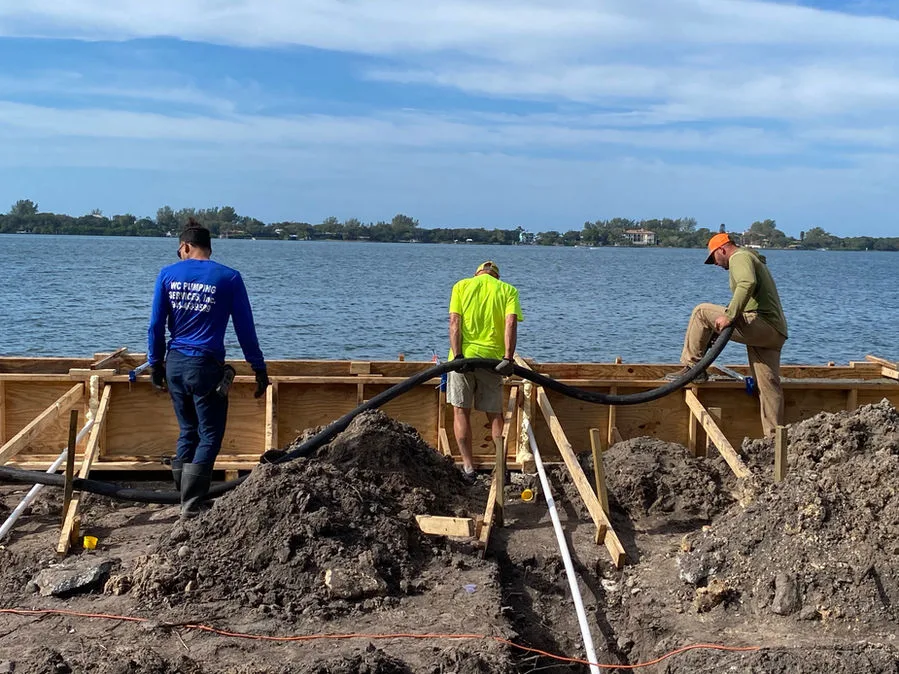
The process begins with shoreline excavation and site preparation. Unstable soil is removed to create a solid foundation for the wall. This step is crucial, as poor preparation can lead to settlement or failure over time.
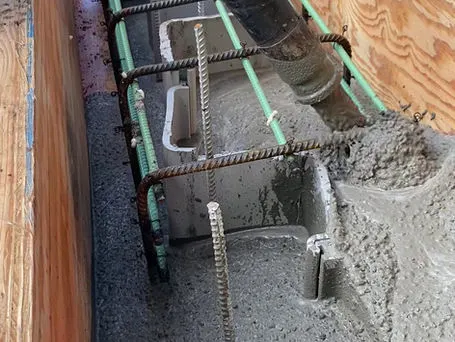
Next, sheet piling or wall panels are installed. These components form the main structural barrier and are driven deep into the ground for stability. Common materials include vinyl, concrete, and steel, all selected for their durability in marine environments.
Anchoring systems are then added to secure the seawall against lateral pressure from soil and water. Tie-backs and anchors prevent the wall from leaning or shifting during storms.
Drainage and Backfill: A Critical Step
One of the most common causes of seawall failure is poor drainage. Water trapped behind the wall creates hydrostatic pressure, which can crack or push the structure forward.
To prevent this, drainage pipes and gravel backfill are installed behind the seawall. This allows water to escape safely while maintaining soil stability.
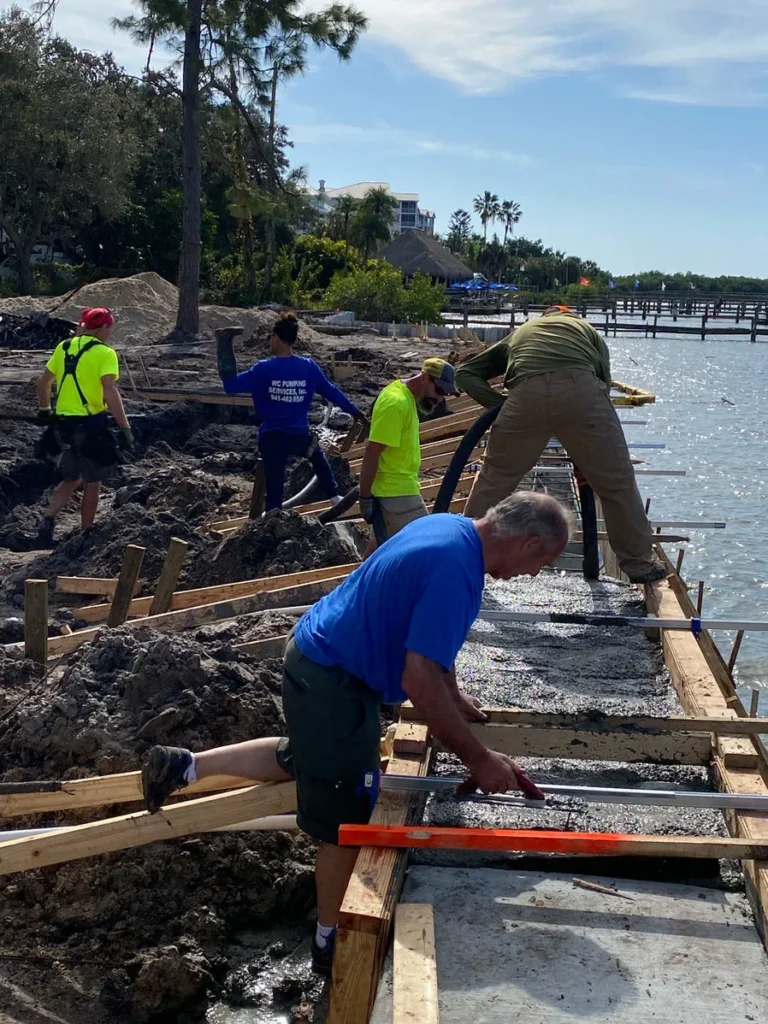
After drainage installation, the area behind the wall is backfilled and compacted. This restores the shoreline and prepares it for landscaping, walkways, or dock connections.
Choosing the Right Seawall Materials
Material selection plays a major role in seawall performance and lifespan.
Vinyl seawalls are popular for residential properties because they are corrosion-resistant, low-maintenance, and visually clean. Concrete seawalls offer exceptional strength and are often used in high-impact or commercial applications. Steel seawalls provide maximum durability but require corrosion protection.
Each material has advantages, and the best choice depends on environmental conditions and project goals.
Maintenance and Long-Term Performance
A well-built seawall can last decades, but regular maintenance is still important. Periodic inspections help identify early signs of erosion, cracking, or drainage issues.
Addressing small problems early significantly extends the lifespan of the structure and reduces long-term repair costs.
Conclusion: Building a Seawall the Right Way
Building a seawall is a long-term investment in shoreline protection. When properly designed and constructed, a seawall safeguards waterfront properties from erosion, storm damage, and land loss.
By understanding site conditions, choosing appropriate materials, and following proven construction practices, property owners can ensure their seawall remains strong and effective for years to come.